


Looking at the striking 55-week MCU lead times, rising production costs, and AI-driven demand for hardware accelerators, digital product manufacturers come to realize that microcontroller selection isn’t a purely technical decision anymore. Now, besides bare hardware specifications, they must factor in the global state of affairs, economic context, legal constraints, and even production capacity.
As embedded engineering experts who keep a keen eye on the MCU market and help clients select hardware for their projects day by day, we see how challenging and time-consuming it is for business owners.
In this article, you’ll find:
- Key chip selection criteria our team references on clients’ projects
- A curated top 10 MCU list from our Head of Embedded Engineering, Pavlo Matiieshyn
- An expert-backed decision framework for choosing the right chip for your project.
Why choosing a microcontroller in 2026 is a long-term business risk decision
For product manufacturers, the selection of the best microcontroller for an embedded system is the foundation of a business strategy: a tiny silicon die can become the biggest point of failure in a product’s lifecycle. Unlike with a peripheral component that can be swapped without substantial impact, an MCU misfit or its unforeseen deprecation will require a complete redesign of your hardware, firmware, and testing protocols from the ground up.
An average device lifetime expectancy spans 5-10 years, making the microcontroller choice a high-impact, long-term decision that needs to account for multiple strategic risks we discuss in this section.
Supply chain stability and logistics
The total global chip output is limited: it is physically constrained by the complexity of the production process and the scarcity of specialized equipment. This leads to soaring costs and lead times stretching between 13 and unprecedented 55 weeks. Our Head of Embedded Engineering, Pavlo Matiieshyn, explains:
For small-to-middle businesses with needs of 5k-50k units a year, it’s hard to compete for MCU supply with Tier-1 automotive and consumer giants. During a component shortage, they simply buy out the entire allocation.”
And if an MCU you need is on a cutting-edge node, you will most likely be pushed to the back of the line. As a result, a single $1.50 part can stall hundreds of thousands of dollars in revenue for you.
Place of origin and geopolitics
Where the MCU is designed and fabricated dictates compliance and tariff exposure. For instance, most ultra-low-cost microcontrollers originate from mainland Chinese brands, vulnerable to the risk of sudden tariffs, export bans, or compliance failures. This is critical if your product is designed for government, defense, or heavily regulated enterprise clients.
Geopolitical factors also affect the supply chain: Taiwan, which manufactures over 90% of global cutting-edge processors, faces constant political pressure. In case of a blockade or crisis in this region, an export halt might cause a trillion-dollar economic damage.
Product lifetime and obsolescence risk
With a wrong chip selection, many embedded projects end up with an unplanned, expensive reengineering just to be able to remain on the market,” says Andrew Mospan, our Account Executive.
To make sure you won’t face supply issues in the future, look for an MCU with a manufacturer’s lifetime guarantee and avoid using components marked as NRND (Not Recommended for New Designs) or EOL (End of Life). Also, pay attention to the chip’s use purpose: industrial B2B products require at least a 7-to-15-year market life, while consumer-grade MCUs typically have a lifespan of 3-5 years.
Certification hurdles
Non-pre-certified MCU doesn’t necessarily mean that you are out of the market. But this entails the need to allocate extra time and expenses for the product certification process. If your MCU handles wireless connectivity (Wi-Fi/Bluetooth), this risk multiplies exponentially because of radio emission standards, like the FCC in the US, or RED in the EU.
This is one of the key reasons why we recommend selecting a chip from major, trustworthy suppliers: they offer a variety of industry-tailored, pre-certified products that already meet strict industry-specific regulations.
For a small production output of 50K units or less, trying to save a dollar on the cost of raw components may result in paying an additional $50,000 in certification lab fees. Not to mention waiting for product clearance and production delays,” says Pavlo Matiieshyn.
Hidden costs
The tag price of the chip itself is only a fraction of the total price of development. The actual cost also includes the ecosystem required to develop and maintain it: engineering hours, developer tools, ready-to-use libraries, and community support. Thus, despite a higher price on raw hardware, MCUs with a mature ecosystem allow making the development process faster and cheaper. For example, by paying an extra $0.40 per unit, you will eventually save 200 hours that your firmware team won’t have to spend writing custom code.
Production volume
Projected production volume is a decisive factor when it comes to calculating the total cost of ownership (TOC). Low production volumes prioritize unit functionality and ecosystem despite higher prices, while for high volumes, the economies of scale apply and put lower unit cost as a higher priority. If you decide too early and opt for the wrong side of the curve, you will either burn all your budget on engineering hours or price yourself out of the market.

What makes a microcontroller future-proof: key evaluation criteria for engineering leaders
When looking for a microcontroller for an embedded system that is expected to last a decade in the B2B or industrial space, technical datasheets cannot be treated as the only selection criteria. A discrete decision requires assessing both the chip architecture and the business context around it. In this section, we focus on technical and non-technical factors that impact an MCU choice.
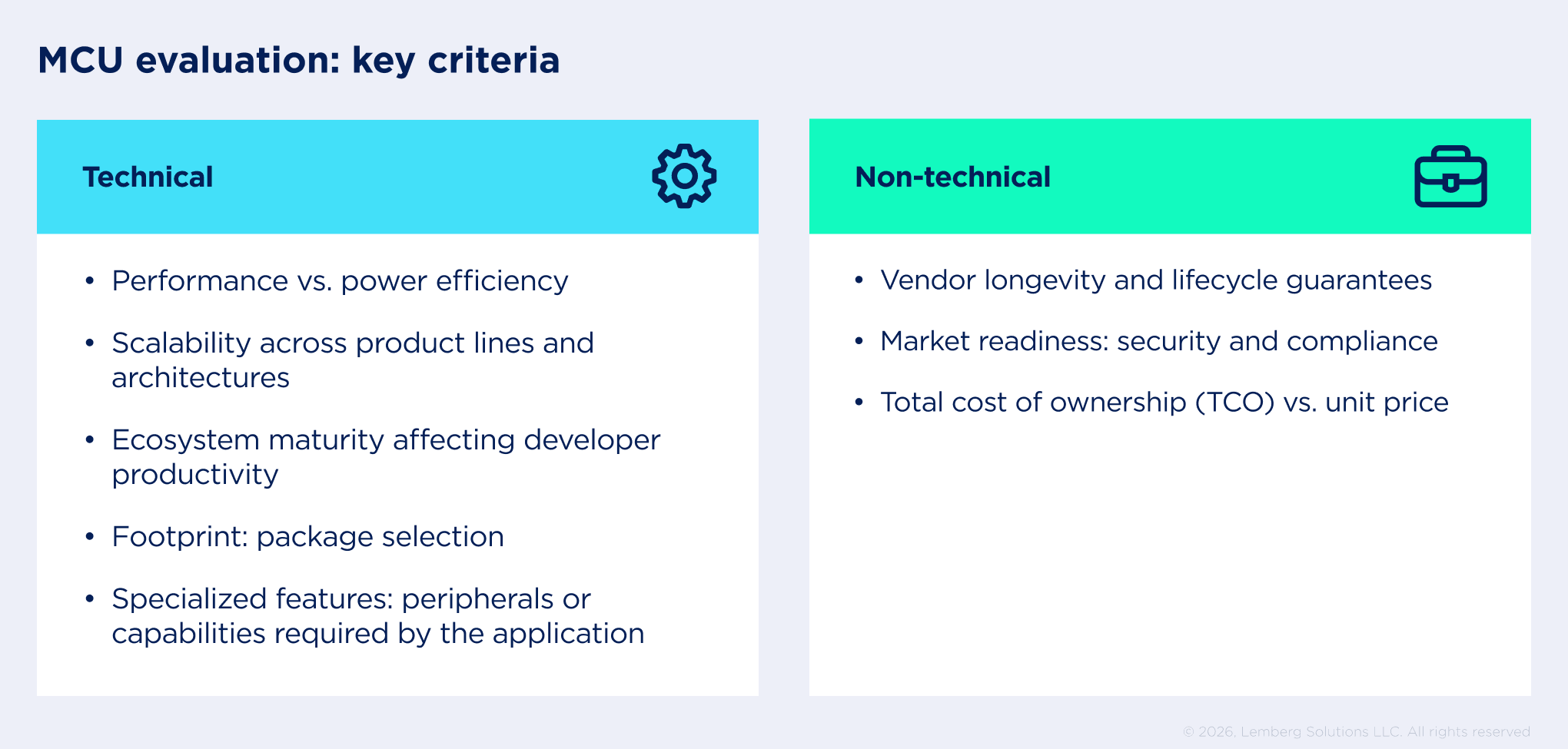
Technical criteria
Performance vs. power efficiency
MCU performance and power efficiency cannot be evaluated solely by looking at megahertz or deep-sleep microamps. Today, performance indicators include dedicated edge-AI hardware vectors designed to run local diagnostics or TinyML models, for example, ARM Helium on Cortex-M55/M85 or custom RISC-V extensions. As for power efficiency, energy used per task is a much more informative indicator than current sleep states.
You can derive performance vs. energy wins from autonomous peripherals that bypass the CPU entirely via Direct Memory Access. For example, in a system, where low-power serial interfaces aggregate sensor data while the primary core remains in full shutdown, waking up to compute a heavy task in 2ms and going back to sleep.
“This arrangement consumes less total battery capacity than an ultra-low-power, slow core that spends 50ms on the same calculations,” Pavlo Matiieshyn summarizes.
Scalability across product lines and architectures
Choosing a highly specialized standalone chip that fits a specific price or performance target for one product variant is not always the best strategy. You may come across feature creep, software updates, or unpredictable component shortages that will force you to change hardware or software mid-cycle.
Our experts recommend selecting vendors that offer pin-to-pin compatibility and shared peripheral registers across memory sizes. For example, when our client decided to migrate from a low-budget STM32C5 series chip to a higher-tier variant, they required only a software recompile with no need to rewrite low-level peripheral drivers or make a single physical alteration.
Ecosystem maturity affecting developer productivity
The developer toolchain is an important choice criterion if you want to save on expensive hours of firmware engineering. The lack of pre-built software modules, a stable, user-friendly IDE, or an active supporting community causes your developers to spend more time writing and debugging code and directly delays time-to-market.
Before settling with a specific MCU vendor or family, research the software ecosystem it provides for engineers. Look for mature, free configuration tools (like STM32CubeIDE from STMicroelectronics) as well as modern, open-source IDE extensions like VS Code. Native support for standard real-time operating systems like Zephyr RTOS or FreeRTOS allows you to speed up your development.
In this context, partnerships with chip vendors provide a great advantage by empowering development teams with direct manufacturer support and consultancy. For instance, Lemberg Solution’s engineers often leverage partnerships with NXP, STMicroelectronics, and Microchip when working on embedded projects to resolve complex technical issues or unexpected silicon flaws.
Footprint: package selection
Your printed circuit board (PCB) fabrication costs, assembly yield, and reworkability largely depend on the physical size of the chip. Ultra-compact packages often require high-density interconnect PCBs with blind/buried vias or via-in-pad technology, which turns a cheap 4-layer PCB into an expensive 6- or 8-layer board.
Popular, compact surface-mount integrated circuit (IC) packages — Quad Flat No-lead (QFNs) — provide a remarkably small footprint and excellent thermal performance while remaining routable on cheap 4-layer boards. Pavlo Matiieshyn comments:
To avoid assembly defects, make sure you keep the pin pitch at 0.5mm or higher. A wise strategy is to design a PCB layout with a dual footprint, so if one package goes out of stock, you can purchase the alternative and assemble it without spinning a new board.”
Specialized features: peripherals or capabilities required by the application
While some additional features allow you to save on your ultimate BOM cost, others prevent you from ever leaving a vendor. If your application requires a unique feature, we recommend looking for MCUs that help eliminate external chips from your component list or radically reduce CPU power consumption, such as:
- Core-independent peripherals (CIPs) or autonomous blocks allow peripherals to communicate and process data while keeping the main CPU in sleep mode.
- High-performance integrated analog chips incorporate built-in Analog-to-Digital Converters (ADCs) and Digital-to-Analog Converters (DACs), operational amplifiers (op-amps), and power management ICs, saving $1.50-3.00 of external analog components off your BOM.
- Hardware-based PUF (Physically Unclonable Function): A unique security feature that provides unhackable identity verification without needing an external secure element chip.
At the same time, it is advisable to avoid:
- Proprietary wireless stacks: a wireless protocol or a non-standard API that only runs on a vendor’s silicon will drown your entire software stack if that vendor suffers a supply shortage.
- Niche core architectures: stick to industry-standard sets like ARM Cortex-M or open-source RISC-V, unless the benefits of a niche vendor at mass volume are too massive to ignore.
For instance, for a telemetry solution in an energy storage system, we needed a chip that could support 6 CAN channels simultaneously. Infineon XMC4700 MCU provided an industry-standard architecture we designed our PCB around and could handle the load and control the system as needed.
Non-technical criteria
Vendor longevity and lifecycle guarantees
High stock availability of a component does not guarantee it is completely safe for long-term production. Chip providers routinely decommission older manufacturing nodes to optimize output, rendering older components obsolete,” our Head of Embedded Engineering, Pavlo Matiieshhyn, warns.
To prevent a mishap, look for parts that are backed by a formal, written Product Longevity Program. These programs guarantee a rolling 10-15-year availability window. Well-known vendors like STMicroelectronics, NXP, or Infineon explicitly provide such information on their product pages. If a chip lacks an explicit longevity commitment on the manufacturer's corporate site, better treat it as a high-risk liability.
Software development providers’ partnerships with chip manufacturers act as an additional warranty for MCU lifecycle support. For instance, as an official partner with NXP, STMicroelectronics, and Microchip, Lemberg Solutions has priority access to their production updates and decommission announcements.
Market readiness: security and compliance
With multiple moving parts involved in an embedded system, relying on software-based encryption only is not enough. Moreover, emerging enterprise mandates and global regulations, such as the EU Cyber Resilience Act and US IoT security standards, require hardware-enforced device security as well.
To safeguard your product, select MCUs that feature an integrated secure element or hardware root of trust (RoT), a hardware cryptographic accelerator, and isolated memory protection. Also, look for chips independently certified to PSA Certified Level 2 or 3 or SESIP3. Even if your product does not feature advanced connectivity today, you will later need hardware-enforced secure boot to handle authenticated over-the-air (OTA) firmware updates safely.
Total cost of ownership (TCO) vs. unit price
The initial purchase price of the silicon represents only a part of its total cost over a product's full lifecycle. Your TOC will also include the engineering hours spent writing custom firmware and peripherals to support the core. This is why highly integrated MCUs with accurate internal oscillators, internal EEPROM emulation, and integrated power management eventually turn out cheaper than bare-bones MCUs.
To make your BOM cost-efficient and avoid the need for continuous developer refactoring during lifecycle maintenance, opt for chips with standard Hardware Abstraction Layers (HAL) and industry-recognized operating systems. Also, avoid legacy architectures that require proprietary compiler licenses and choose vendors fully integrated with open-source GCC/Clang toolchains.
Understandably, such a multitude of technical and economic factors can be hard to navigate, especially when the hardware and global economic situation are evolving virtually day by day. Taking the benefit of embedded software consulting services from experienced electrical engineering experts will help estimate the risks realistically and make a tailored MCU choice.
Top microcontrollers for embedded systems in 2026: a strategic overview by use case
The ideal chip must combine the necessary parameters for your specific project with long-term supply chain viability, security compliance, and an ecosystem that keeps engineering hours low. In this section, we put together a list of the best microcontrollers for embedded development that covers 90% of commercial B2B use cases while mitigating risks related to supply chains, engineering debt, and regulatory compliance. These MCUs:
- Provide Tier-1, native upstream support in Zephyr RTOS or standard FreeRTOS for portability
- Eliminate external operational amplifiers and high-resolution timers, combine different wireless standards, and emulate legacy or custom hardware interfaces
- Feature hardware-isolated security, secure boot, and encrypted over-the-air (OTA) updates out of the box.
Wireless & IoT powerhouses
1. Nordic Semiconductor: nRF54 Series
Specifications:
- Arm Cortex-M33 cores running up to 320 MHz
- New ultra-efficient multiprotocol radios (Bluetooth 6.0, Thread, Matter)
- Fabricated on a highly dense 22nm process node.
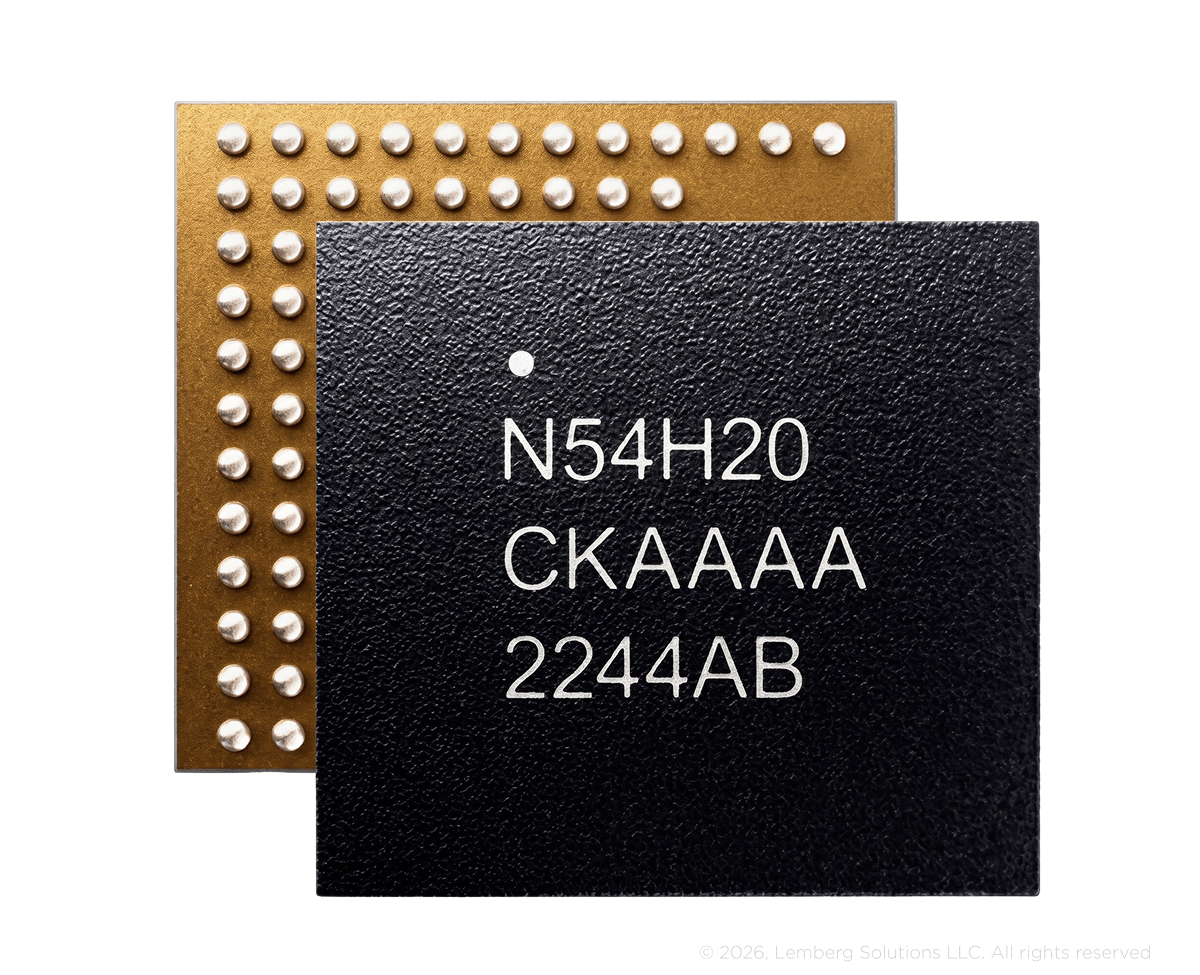
This microcontroller for embedded systems provides next-generation ultra-low-power wireless networking, spanning from basic nodes (nRF54L) to heavy edge computing (nRF54H). The 22nm process means these chips will remain relevant and available for at least the next 15 years. As the direct successor to the industry-standard nRF52 series, it delivers 3x the processing efficiency. The RRAM technology allows instant wake-and-write cycles, vastly extending industrial battery life, critical for wearables. For security, it features advanced physical tamper protection and TrustZone isolation.
Best applications: medical IoT, smart home, industrial asset tracking. While entry-level nRF54L variants handle standard battery-powered devices, high-end nRF54H models provide dual-core muscle and massive memory layouts for intense local clinical algorithms or industrial data filtering.
2. Espressif Systems: ESP32-S3
Specifications:
- Dual-core Xtensa 32-bit LX7 at up to 240 MHz
- 384 KB ROM, 512 KB SRAM
- Integrated 2.4 GHz Wi-Fi 4 + BLE 5.0
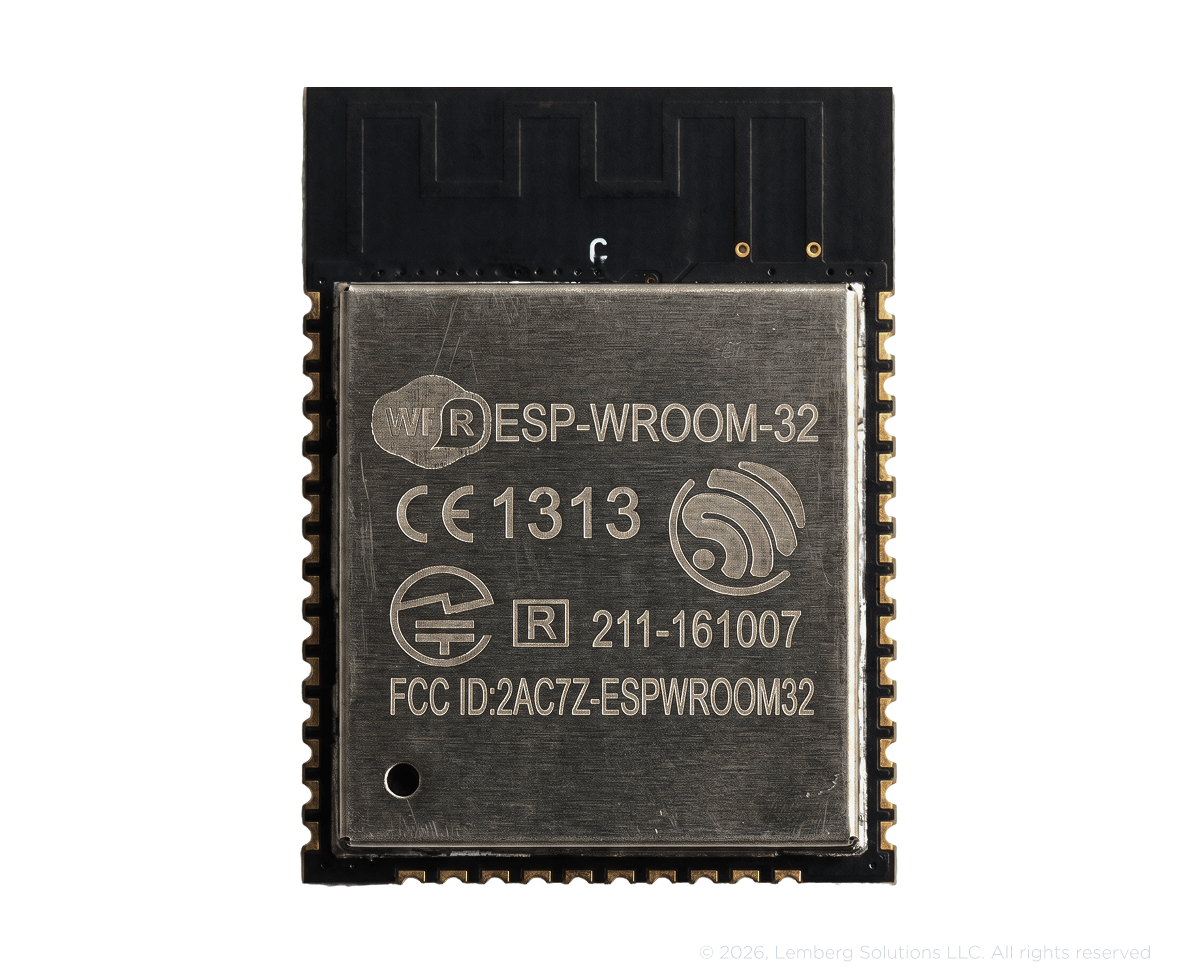
Offering the lowest cost-per-feature for Wi-Fi/BLE, this microprocessor is the go-to solution when you need rich connectivity and considerable bill-of-materials savings. As an interesting feature, it includes dedicated vector extensions for Neural Network acceleration (TinyML), enabling low-cost voice wake-word or vision processing. The vendor offers a 10-year official lifecycle guarantee, while the massive global open-source ecosystem radically reduces the product’s time-to-market.
Best applications: smart home, smart appliances, light industrial HMI.
3. Espressif Systems: ESP32-C6
Specifications:
- Single-core 32-bit RISC-V at 160 MHz
- 320 KB ROM, 512 KB SRAM
- Natively integrates Wi-Fi 6 (2.4 GHz), Thread 1.3, Zigbee 3.0, and BLE 5.3
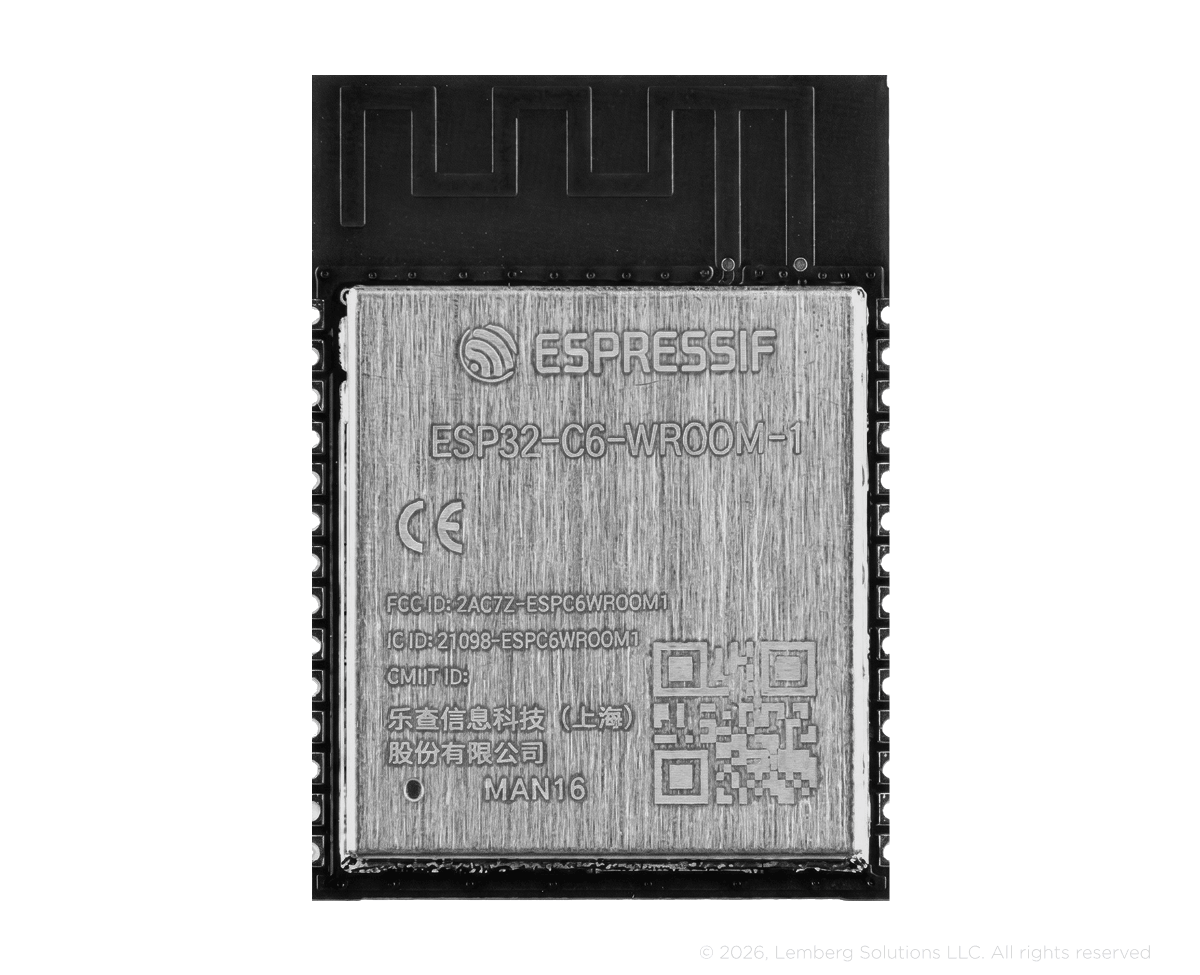
This ultra-low-cost RISC-V chip was designed specifically to bridge the transition to modern smart home standards. It is the most cost-effective way to achieve native Matter compatibility over Thread or Wi-Fi 6 in IoT devices. Along with a 10+ year commercial lifecycle, its reliance on an open RISC-V core ensures long-term freedom from proprietary architecture licensing risks.
Best applications: smart home, smart grid infrastructure.
Industrial and edge computing heavyweights
4. STMicroelectronics: STM32G4 series
Specifications:
- Arm Cortex-M4F at 170 MHz
- Up to 512 KB flash, 128 KB RAM
- High-Resolution timer (HRTIM) with 184 ps resolution
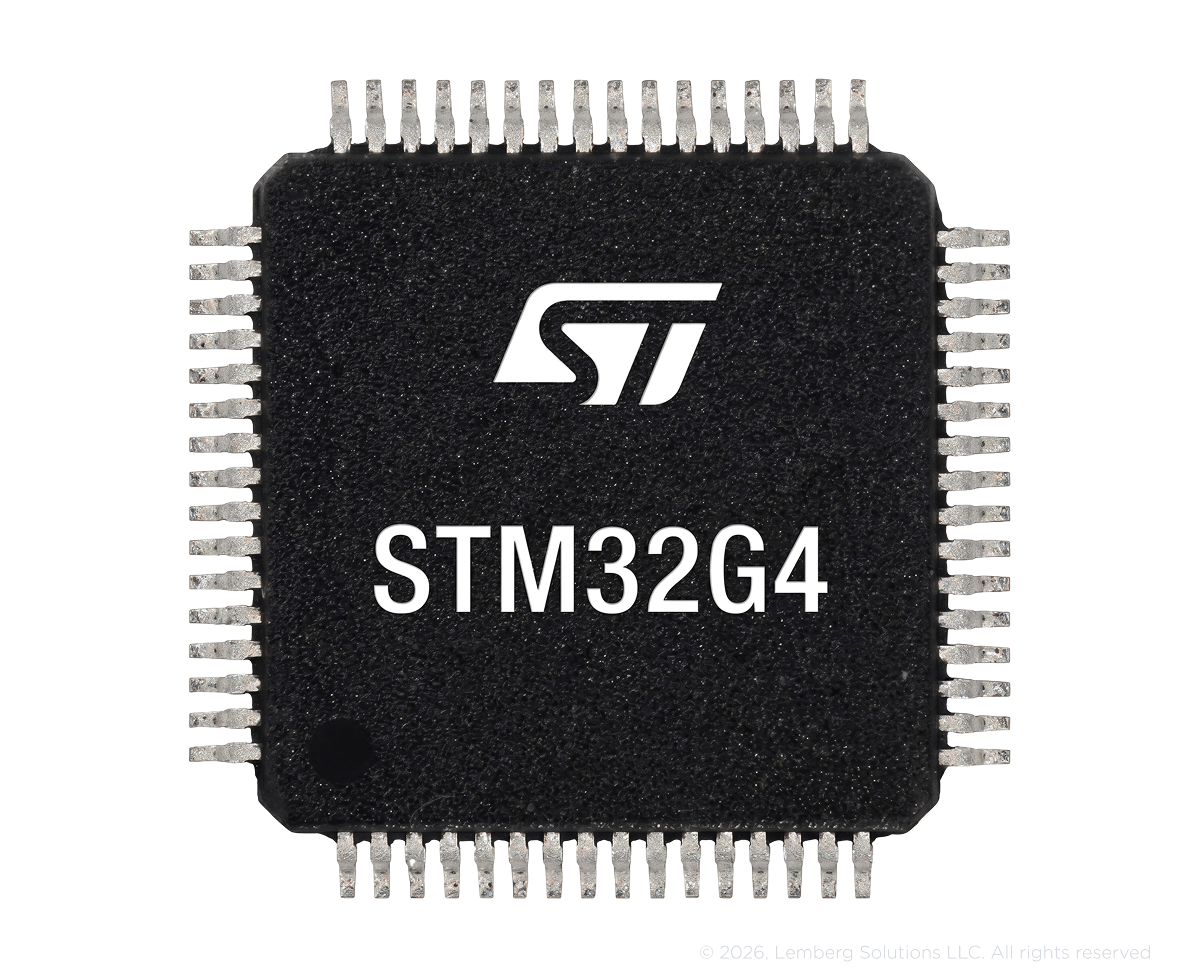
The gold standard for mixed-signal control, this chip offers unmatched internal analog integration among microcontrollers for embedded systems. Its mathematical hardware accelerators (CORDIC and FMAC) offload trigonometry and filtering functions from the CPU. Rich integrated analog (multiple high-speed 12-bit ADCs, DACs, Op-Amps, and Comparators) replace dollars worth of external component costs. The vendor provides a 10-year product longevity program.
Best applications: industrial automation, motor control, solar inverters, medical equipment.
5. STMicroelectronics: STM32N6 Series
Specifications:
- Arm Cortex-M55 @ 800 MHz (with Helium vector extensions)
- ST Neural-ART NPU (600 GOPS)
- 4.2 MB contiguous internal SRAM
- Flash-less architecture
- MIPI CSI-2 camera interface and dual-lane MIPI DSI display interface
- Hardware H.264 video encoder
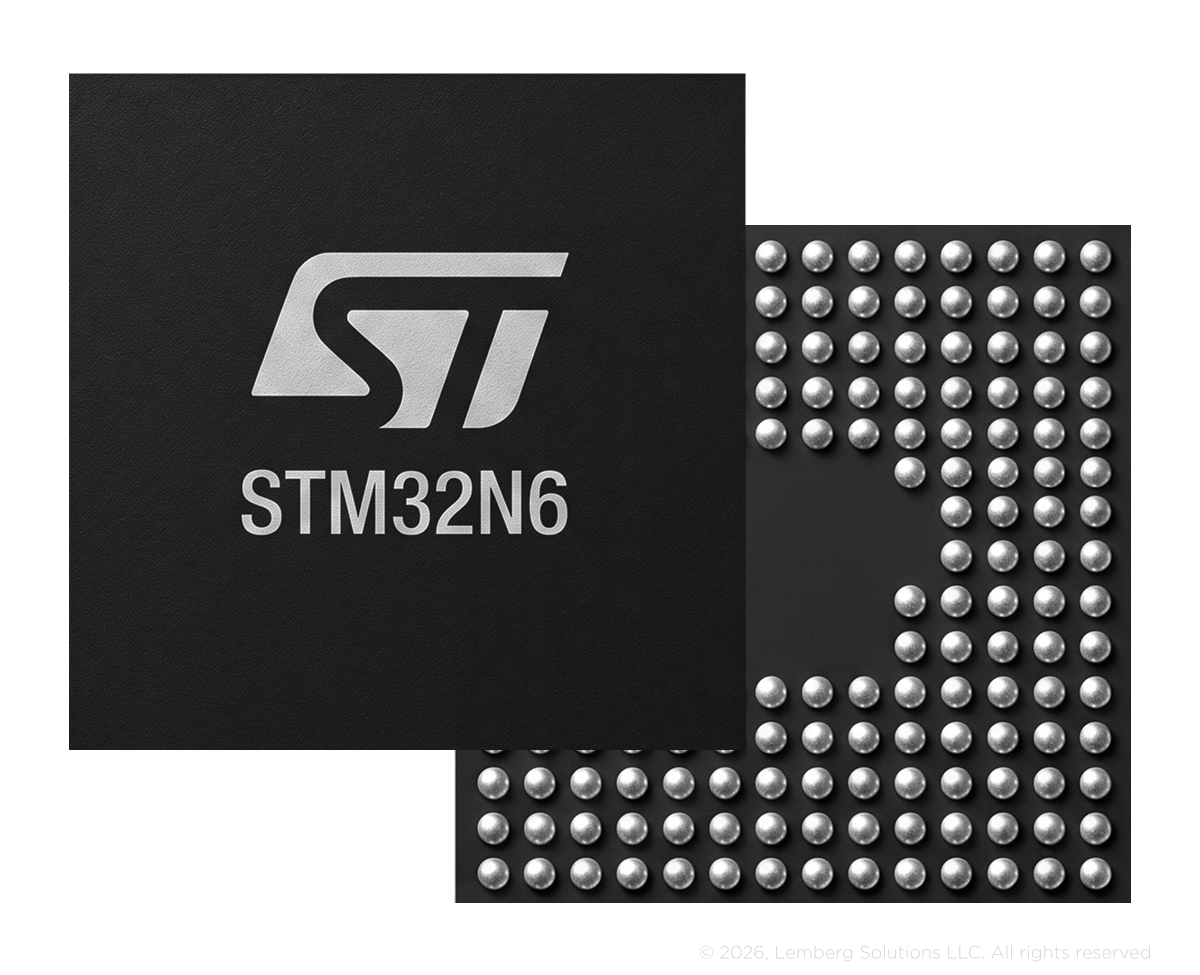
This chip bridges the gap between traditional embedded microcontrollers and power-hungry application processors. Combined with a 1 GHz NPU, its Cortex-M55 core delivers impressive TinyML compute efficiency (3 TOPS/W), handling real-time 5MP computer vision with ease. On the flip side, the flash-less architecture increases routing complexity compared to the self-contained NXP MCX N series and requires an external high-speed serial flash or RAM.
Best applications: automated industrial optical inspection through high-frame-rate video encoding or local camera analytics without moving to full Linux.
6. NXP Semiconductors: MCX N Series
Specifications:
- Dual Arm Cortex-M33 at 150 MHz
- Up to 2 MB Dual-Bank Flash with ECC, 512 KB RAM
- Dual CAN FD, Ethernet MAC.
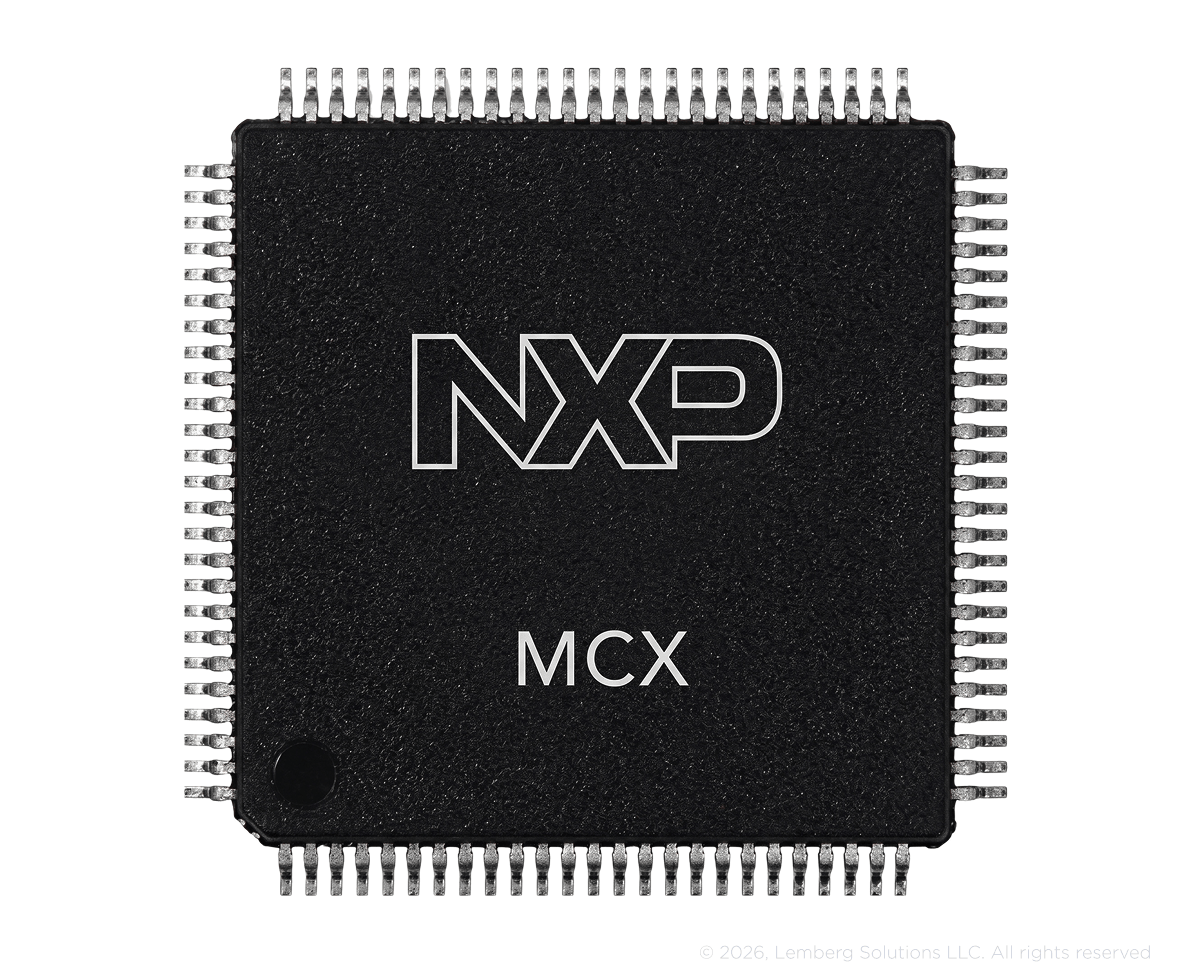
This MCU is designed for complex edge-processing demands where security and machine learning must run purely on the silicon. It features NXP’s proprietary eIQ® Neutron Neural Processing Unit (NPU) for local AI acceleration and the EdgeLock® Secure Enclave, providing an immutable hardware Root of Trust and secure over-the-air (OTA) capabilities. The product’s lifespan is backed by NXP’s formal 15-year Product Longevity Program.
Best applications: connected industrial machines, edge gateways, smart building controllers.
7. Microchip Technology: SAM E54 Series
Specifications:
- Arm Cortex-M4F at 120 MHz
- Up to 1 MB Flash, 256 KB RAM
- Integrated Ethernet MAC (IEEE 1588), Dual CAN FD.
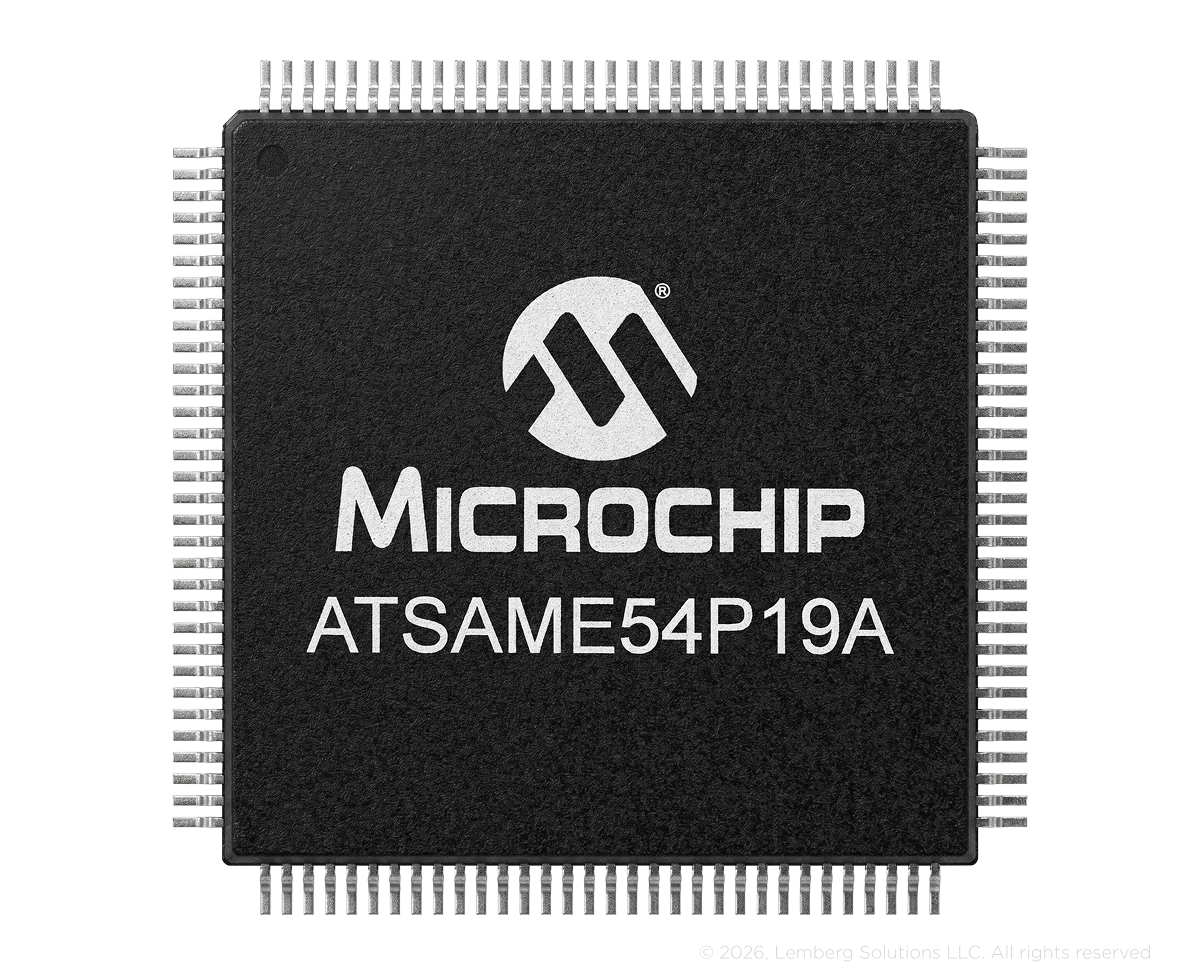
This rugged MCU is the most reliable microcontroller for communications in harsh electrical environments. It features excellent noise immunity and robust latch-up performance. Also, the chip ensures easy scalability within the Microchip SAM family, allowing code migration to lower-power SAM D series or up to MPUs. As for the lifespan, Microchip operates a client-driven longevity model, keeping parts active as long as orders exist.
Best applications: industrial automation, heavy machinery, smart grid infrastructure.
Low-power and secure innovators
8. STMicroelectronics: STM32U5 Series
Specifications:
- Arm Cortex-M33 at 160 MHz with TrustZone
- Up to 2 MB Flash, 786 KB SRAM
- Advanced 2D graphics accelerator.
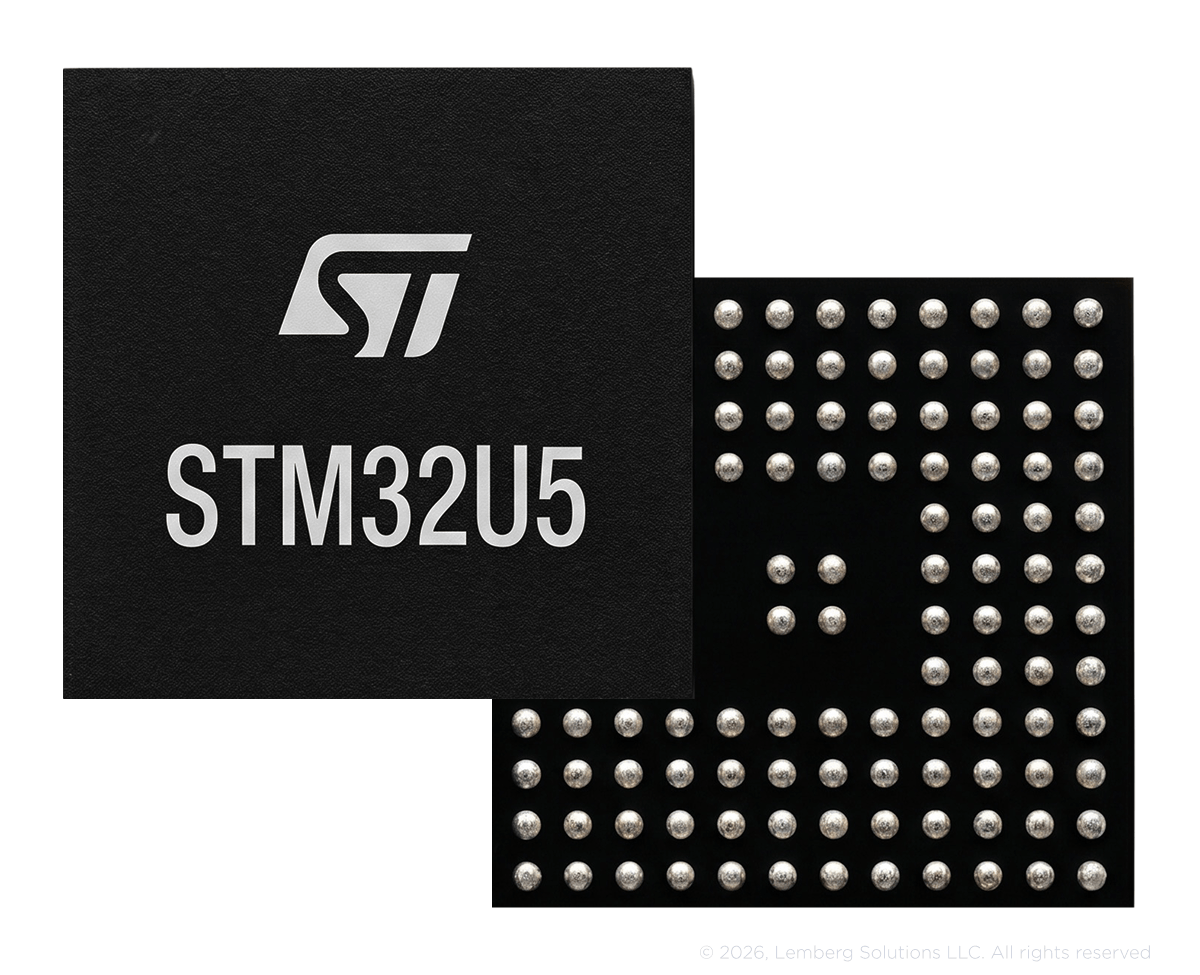
An ultra-low-power microcontroller designed for connected devices that require rigorous cybersecurity compliance. Its autonomous peripheral mode (LPBAM) allows the chip to sample sensors and move data via DMA while the main CPU core remains in full sleep. The chip is certified up to PSA Certified Level 3 and SESIP3 for strict regulatory readiness and includes the vendor-guaranteed longevity of 10 years.
Best applications: healthcare wearables, remote IoT sensors, smart utility meters.
Automotive and entry-level value leaders
9. NXP Semiconductors: S32K3 Series
Specifications:
- Arm Cortex-M7 up to 240 MHz
- Up to 8 MB Flash with ECC
- Advanced Hardware Security Engine (HSE).
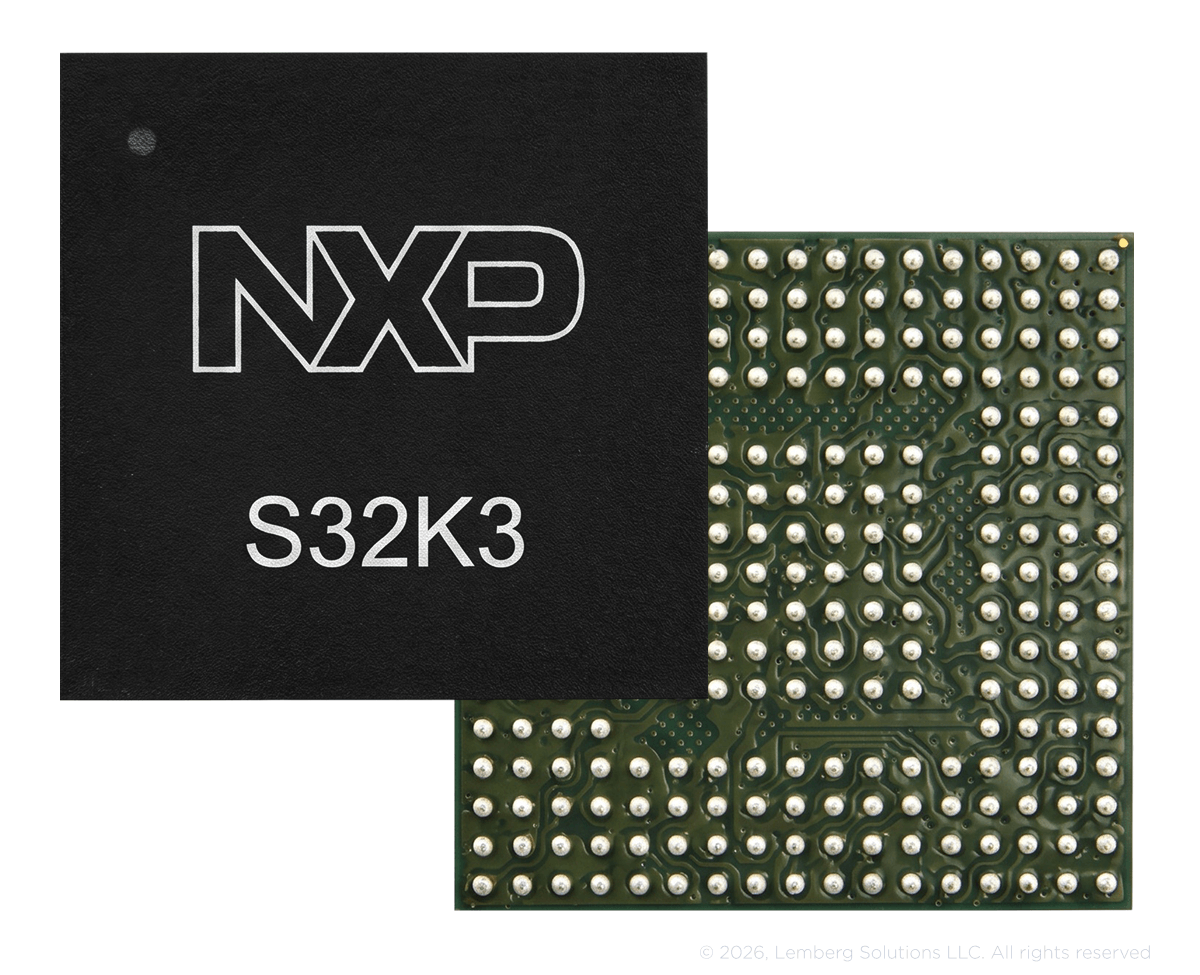
Built specifically to survive the stringent safety and thermal requirements of the automotive and heavy-industrial worlds and to comply with functional safety standards (ASIL-B/D ISO 26262). This microcontroller includes a lock-step core configuration that executes the same code simultaneously across two physical cores to check for hardware calculation faults in real time. Falls under the vendor’s 15-year automotive-grade product longevity program.
Best applications: automotive body electronics, battery management systems (BMS), industrial safety systems.
10. Texas Instruments: MSPM0G Series
Specifications:
- Arm Cortex-M0+ at 80 MHz
- Up to 128 KB Flash, 32 KB RAM
- Integrated Hardware Math Accelerator
- Support for CAN FD and AI accelerators
MSPM0G is a line of ultra-low-power-optimized 32-bit embedded systems microcontrollers built for high-performance processing and compute-heavy applications. Integrated advanced ADCs and DACs enable highly precise analog data capture and signal transfer, ideal for monitoring and controlling fast-moving machinery or complex electrical grids. Built-in motor control hardware and rugged, heavy-duty CAN FD connectivity allow developers to combine cost efficiency with great sensing and control capabilities. Covered by TI’s 10-15-year industrial longevity program, the chip provides an exceptional TCO-to-unit-price balance and world-class supply infrastructure.
Best applications: low-cost sensing, medical disposables, consumer appliances, pump control.
Comparison of embedded microcontrollers: evaluating capacity, efficiency, and cost structure
As each embedded project has its own performance, power, footprint, and special feature requirements for hardware, a one-size-fits-all solution is impossible. In this case, the best approach would be to understand the differences between comparable items. Here, we present an analysis of microcontrollers from our top 10 list based on the focus areas they were built for.
Connectivity-oriented MCUs
Microcontrollers like these prioritize built-in wireless connectivity interfaces, ensuring rapid integration of the chip into the system.
| MCU | nRF54 | ESP32-S3 | ESP32-C6 |
|---|---|---|---|
| Wireless interfaces | BLE + Thread, but no Wi-Fi | Wi-Fi + BLE | Wi-Fi 6 + Thread/Matter |
| Energy efficiency | Optimized for ultra-low-power consumption | Relatively high consumption due to Wi-Fi and dual core | Moderate, with power-hungry Wi-Fi 6 but improved architecture |
| Ecosystem maturity | Good Nordic SDK and Zephyr support, but small community | Mature SDK, extensive developer community | Extensive community, but still stabilizing dev tools |
| Processing capacity | Moderate, not designed for heavy workloads | Relatively high, can handle light ML or audio processing | Moderate, not designed for heavy workloads |
| Determinism | Moderate due to simple stacks | Low due to unpredictable latency | Low due to unpredictable latency |
| System integration | Excellent for BLE, requires an external chip to add Wi-Fi | Excellent, no external wireless components needed | Excellent, no external wireless components needed + next-gen protocols |
| Best for | Battery-powered IoT applications | Development speed and support | Development speed and modernized connectivity |
Real-time control MCUs
This category includes reliability-focused MCUs with deterministic architecture, ideal for embedded applications that require precise action control and timing (like motor control, power electronics, automotive systems).
| MCU | STM32G4 | S32K3 |
|---|---|---|
| Real-time performance | Precise control loops due to tight coupling of timers, ADC, and PWM | Automotive-grade scheduling due to its real-time cores |
| Analog and control peripherals | High-resolution ADCs, advanced timers, op-amps ensuring excellent motor and power control | Strong but less specialized for analog-heavy control |
| Safety and compliance | Code-driven safety checks, relies on X-CUBE-STL self-test libraries for SIL2/IEC 61508 compliance | Hardware-based safety, providing built-in ISO 26262 compliance and ASIL support |
| Developer ecosystem | Broad and well-documented | Strong but narrow-focused |
| TOC | Ensures cost efficiency for industrial use cases | Higher costs for automotive-grade safety features |
| Domain flexibility | Fits non-real-time scenarios well | Heavily optimized for automotive use cases |
| Best for | Industrial control and adaptability | Automotive and safety-critical applications |
General-purpose MCUs with a focus on efficiency and security
This group of MCUs is designed to deliver low power consumption, a long product lifecycle, and adequate performance vs. efficiency balance without focusing on a specific application area.
| MCU | STM32U5 | MSPM0G | SAM E54 |
|---|---|---|---|
| Energy efficiency | Low-power-optimized architecture and operating modes | Simple architecture ensures high power efficiency | Higher consumption for the sake of performance wins |
| Performance | Optimal performance vs. power needs balance | Able to handle heavy computing and time-sensitive tasks | Highest clock speeds and capability in the group |
| Security | TrustZone, crypto accelerators, secure boot ensuring PSA Certified Level 3 and SESIP Level 3 certification | Hardware-level security and cryptography capabilities | AES encryption, public-key cryptography, error-correcting codes, secure boot |
| Developer ecosystem | Comprehensive, free suite of hardware, software, and AI tools, huge community, long-term support | Growing toolset of software libraries, graphical code-generation tools, and low-cost evaluation boards | Well-established IDEs, code generation tools, and evaluation boards |
| TOC | Moderate cost efficiency, with increasing costs for premium features | Excellent for cost-efficient deployments | Moderate, offering mid-range pricing |
| Best for | Secure, long-life IoT devices | Precision analog tasks and low-power applications | Networking and complex systems |
AI-capable, high-compute chips
These microcontrollers feature heavy workload processing capabilities, making them ideal for edge AI implementations.
| MCU | STM32N6 | MCX N |
|---|---|---|
| AI/ML capabilities | Features a built-in NPU enabling neural network inference | DSP/ML acceleration + eIQ Neutron NPU in select models |
| Compute power | Disruptive computing level with Arm Helium vector processing CPU + 1 GHz NPU | Dual-core architecture + embedded PowerQuad co-processor for DSP and voice processing algorithms |
| Energy efficiency | Power consumption grows with performance | Well-balanced efficiency vs. performance ratio |
| System impact | Requires additional ML pipelines, memory planning | Distributes general control, DSP/voice processing, and ML across its components |
| Developer ecosystem | New tools and workflows are still evolving | Backed by the strong NXP ecosystem |
| Domain flexibility | Strong focus on AI workloads | A more general-purpose, high-performance MCU |
| Best for | AI-first edge devices | Intelligent edge, IoT, and industrial applications |
Avoiding costly redesigns: scalability and software portability in embedded systems
As we’ve mentioned earlier, microcontroller replacement mid-lifecycle can disrupt your entire product delivery process, causing a domino reaction, as embedded systems and microcontrollers become tightly dependent on each other.
Suppose, the pin layout of your new MCU does not match. How will it affect your entire development cycle? First, your electrical engineers must reroute the signal pathways on the PCB and assemble a new prototype. Then, firmware engineers will have to take time to master a brand-new developer toolchain and completely rewrite deeply tied software. Finally, you might need to pass another certification round to re-verify the electromagnetic emissions profile of your new PCB or other nuances.
All this results in months of production time and thousands of dollars spent. Fortunately, with the right approach focusing on system scalability and application portability, you can avoid such a resource waste.
Design hardware with scalability in mind
Imagine, six months into development, you decide to add an AI feature. Or, after going to production, you realize a price reduction is needed. Should this happen, selecting an MCU from a pin-compatible microcontroller family will be your proof against re-engineering nightmare. Instead, you can just use a higher or lower variant of a compatible MCU on the exact same development board, without changing a single trace. Such can be easily found in vendors with an extensive catalog of products, like STMicroelectronics or Espressif Systems.
Another useful lifehack is creating a 15-20% buffer to your GPIO count — the number of General Purpose Input/Output pins available on the microcontroller. In addition to the must-have components in the system, embedded projects often come to need extra pins for hardware debugging, an unexpected sensor, or diagnostic LEDs later in the process. The spare, routed GPIOs on the MCU allow adding the necessary elements without designing the board from scratch.
Ensure application code portability
Software portability that entails your application code can be easily moved to a completely different MCU architecture in case you need, for example, switch from an STMicroelectronics Cortex-M4 to an NXP Cortex-M33, or even a RISC-V core. To enable this, you have to consider how cleanly the vendor allows separating business logic from the hardware-specific drivers. With a mature Hardware Abstraction Layer (HAL) in the vendor’s ecosystem, your code will interact with abstract functions instead of manipulating silicon registers directly. Thus, if you have to switch vendors, you will only swap out the driver layer while the core application layer will remain untouched.
Ecosystems that support cross-vendor standards include:
- ARM-supported CMSIS (Cortex Microcontroller Software Interface Standard) provides a uniform software interface for the processor core and peripherals
- Widely adopted Real-Time Operating System (RTOS) guarantees massive portability, with Zephyr RTOS using a device-tree structure similar to Linux. If your software is written for Zephyr, porting it to a completely different vendor's MCU can sometimes be done just by changing a configuration file.
Leverage evaluation boards or development kits
Before spending time and money designing your own custom PCB, it’s always good to test ideas using an official evaluation board for your target MCU. This way, you make sure your microcontroller can really handle your project, no matter what the datasheet says.
To test the chip’s actual performance, run your most complex, the most computationally heavy parts of your application on this testing board. This will allow you to measure the chip's actual speed and limits to make sure it will not freeze or lag when your final product is out in the real world.
Another important thing to check for battery-powered products is battery life, to ensure the device will not accidentally drain the battery in a few hours instead of lasting for weeks as you originally planned. You can use the evaluation board to check exactly how much electricity your MCU drains by measuring the current consumption when the device is fully active versus when it is in sleep mode.
How to choose a microcontroller for your project: a decision framework for engineering teams
Because of the central role of a microcontroller in an embedded system, it is useful to have a decision framework that would serve as a risk-mitigation filter and include both business factors and hardware specifications. In this section, we suggest a step-by-step scheme our experts use when helping clients make the right MCU choice.
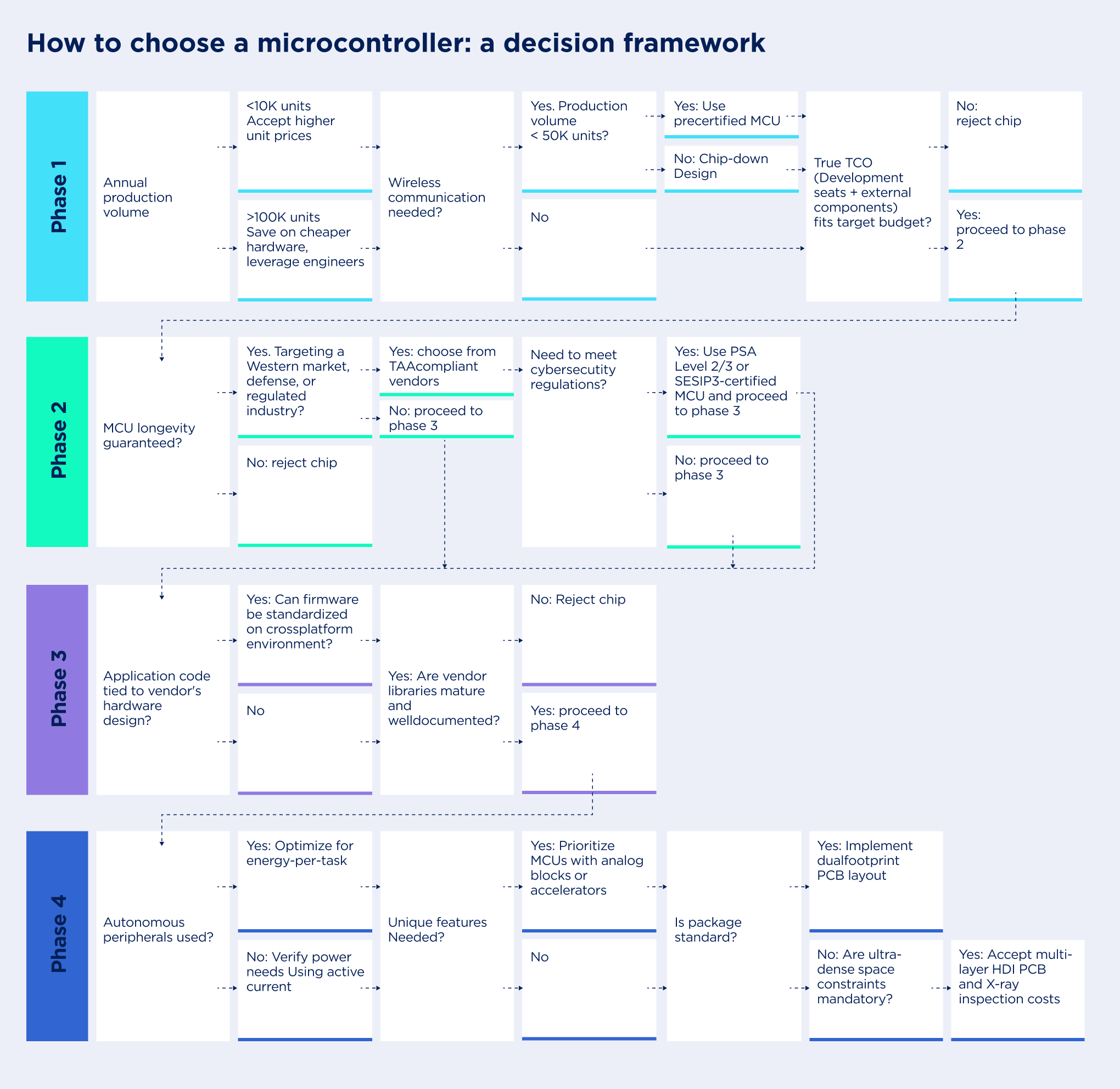
Phase 1: Define the project budget and production volume
Before looking at a single datasheet, consider the conditions that impact the financial boundaries of your product’s lifecycle.
Planned production volume
Here, economies of scale apply. For low-volume products (<10k units/yr), it’s more efficient to focus on fast time-to-market. In this case, a wise approach is to accept higher unit prices but save on engineering hours with an easy-to-program component. Meanwhile, at a massive production scale (>100k units/yr), you will benefit from saving as much as possible on hardware and paying engineers for extra effort to optimize and customize the system.
Radio-frequency testing
If you build connected devices, you will most probably need an MCU with an integrated wireless interface. Such components must pass specialized certifications to comply with regional safety and emission laws, which entails additional costs. The choice of an MCU here will also depend on your production plans: under 50k annual units, we recommend opting for a pre-certified component, like a Nordic or Espressif module, to bypass the mandatory RF testing and save $50k or more on development.
True Total Cost of Ownership (TCO)
Remember the take about hidden costs? This is where it comes into play. Apart from the chip’s tag price, look at the cost of software tools needed to build a product: development seats in proprietary compilers, external components, extra memory, and so on. If a $1.00 MCU requires additional components and proprietary software to work, its actual price is at least double the stated.
Phase 2: Risk, сompliance, and lifecycle vetting
The goal of this step is to ensure your business won’t be left vulnerable to sudden supply chain collapses or regulatory changes.
Verify announced longevity guarantees
Use the vendor's official corporate catalog to see if the MCU is explicitly backed by a 10-to-15-year rolling longevity program. Companies like ST, NXP, or TI always have this information available. Our Head of Embedded Engineering, Pavlo Matiieshyn shares even more:
Official partnerships with MCU vendors allow us to go a step further and get detailed information or updates that haven’t been made public directly from the manufacturer. Of course, clients’ projects benefit from this in planning and delivery times.”
Mitigate geopolitical and source risks
Make sure the MCU’s Country of Origin (COO), specifically its place of fabrication and packaging, won’t affect your supply chain with unexpected bans or tariffs. If you are building a product for a Western enterprise, defense, or highly regulated B2B sector, we strongly advise to opt for a component sourced from an authorized Trade Agreements Act (TAA) region (such as the US, EU countries, Japan, or Taiwan) and produced by a diversified semiconductor vendor.
Ensure regulatory security readiness
The MCU of your choice must feature hardware-isolated security, such as Arm TrustZone, a Secure Enclave, or a PUF. Also, consider upcoming security regulations: chips certified to PSA Level 2/3 or SESIP3 natively enforce secure boot and encrypted OTA updates required by the EU Cyber Resilience Act.
Phase 3: Software ecosystem and portability
Having passed the budget and regulatory filters, you should aim to minimize the risk of accumulating engineering debt and plan an escape hatch in case your primary MCU experiences a supply chain shortage.
Enforce architectural portability
The safest way is to select from MCU architectures that support a highly cross-platform, modern environment like the Zephyr RTOS or a robust, vendor-supported Hardware Abstraction Layer (HAL). Avoid proprietary, vendor-dependent firmware architectures in which application code directly toggles hardware registers and locks you in.
“Control over code base and intellectual property is a major concern for business owners. This way, they can port their entire firmware to a competitor's chip in weeks,” Pavlo Matiieshyn comments.
Evaluate toolchain maturity
When software libraries are buggy or poorly documented, development teams waste thousands of dollars writing basic drivers and looking for solutions to unexpected errors. To save time and costs, audit the vendor’s developer ecosystem for having a robust IDE, code configuration tools, hardware-agnostic HAL, production-ready communication stacks, high-quality documentation, and even community and support.
Phase 4: Hardware and performance optimization
Only after passing the commercial, risk, and software checks do we recommend getting to optimizing the physical silicon layout.
Measure energy-per-task
Look how much energy the chip requires when actively working. To maximize battery life, choose a chip that wakes up quickly, finishes its calculation instantly, and immediately knocks back out. Consider using autonomous peripherals that allow the chip to gather data while the CPU core remains fully powered down, such as DMA or Core Independent Peripherals.
Audit unique features
Every external component removed increases PCB reliability and lowers assembly costs. Therefore, look for MCUs that integrate high-performance analog blocks (PGAs, Op-Amps, ADCs) or specific hardware accelerators (like the RP2350’s PIO blocks or the STM32G4's math accelerators).
Ensure safe footprint and manufacturing constraints
It is best to stick with common, easy-to-weld styles (QFN or LQFP) with a pin pitch of at least 0.5mm.
These shapes are easy for factory assembly machines to handle, which keeps manufacturing costs low and prevents accidental electrical shorts”, Pavlo Matiieshyn explains.
Ultra-tiny, advanced chips with BGAs or WLCSPs (hiding the solder dots completely underneath) require expensive, multi-layer HDI PCBs and complex X-ray inspection, so no need to use them unless your product absolutely demands a super-compact design.
To protect your project from supply chain disruptions, employ a dual-footprint layout on your PCB, allowing two different chip shapes or sizes to fit in the exact same spot. This blueprint hack lets you use a backup chip if your primary choice suddenly goes out of stock. This way, you won’t have to waste weeks and thousands of dollars completely redesigning and remanufacturing a brand-new circuit board.

Building embedded systems that remain viable beyond 2030
Ultimately, selecting a microcontroller requires finding a business-tailored balance of hardware cost and long-term strategic risks. An ultra-cheap option like an Espressif chip could be completely disqualified over geopolitical hurdles like country of origin, while a premium chip like a Nordic variant will completely justify its upfront cost by slashing engineering debt and pulling your time-to-market forward.
On the other hand, your product's lifecycle viability is dictated by ecosystem maturity and uncompromising hardware requirements. For example, STMicroelectronics built dominant market share through accessible $20–25 development boards and rich software toolchains that dramatically flattened the engineering learning curve. At the same time, physical constraints or hardware-baked features can instantly force a specific chip choice.
By vetting microcontrollers through this dual lens of commercial scalability and precise peripheral integration, you can confidently build resilient embedded systems that survive both shifting global regulations and unpredictable supply chain disruptions.


